
On this page
- What it is
- Why it suits Clark County
- Where it struggles
- How it is fitted
- Living with it
- Is it the right choice for your house?
- How does micro-mesh work?
- What should I look for in a micro-mesh guard?
- Micro-mesh or reverse-curve?
- How much do micro-mesh gutter guards cost?
- How is micro-mesh installed?
- What affects the price
What it is
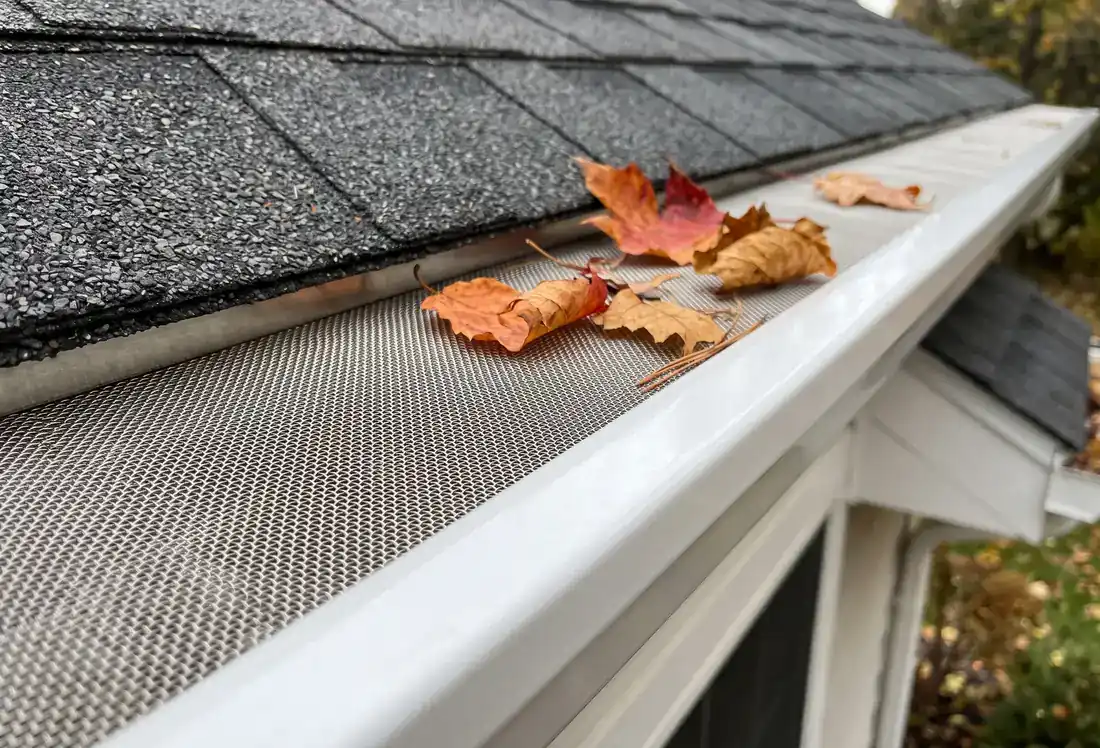
Micro-mesh guards have two parts: a woven stainless steel screen with openings fine enough to stop a needle, and a stiff frame, usually aluminum, that holds the screen in shape and fixes to the gutter. Water clings to the mesh and passes through it. Debris stays on top.
The frame matters as much as the mesh. A screen with no support sags into the gutter under a season of wet debris and becomes a trough within a trough.
Why it suits Clark County
The debris here is small. Douglas fir needles are about an inch long and narrow, cedar sheds scale-like sprays, and both come down all year. Guards with holes or slots sized for maple leaves let much of that through.
Micro-mesh is the one common design with openings smaller than the debris. It also keeps out the granules that wash off asphalt shingles and the seeds that would otherwise sprout in the gutter.
Where it struggles
Moss. Oregon State University's pest guide points out that an overhanging conifer both sheds needles and shades the roof. Moss from that roof lands on the mesh, and on a shaded eave it can take hold there. It needs brushing off.
Surface film. Pollen, fine grit and tree sap gradually coat the mesh. Water then sheets across instead of dropping through. A wash restores it.
Valleys. A roof valley delivers a concentrated stream that can skate straight over. Installers add a diverter or leave a short open section.
Ice. Freezing rain glazes the mesh. It clears when it thaws.
Flat installation. Mesh laid level holds debris. It should slope down toward the gutter lip so material slides off.
How it is fitted
- The gutters are cleaned and flushed, and any pitch or leak problems are fixed. Covering a fault makes it harder to reach.
- The front edge of the guard fastens to the gutter lip.
- The back edge either slides under the first course of shingles or fixes to the fascia or the back of the gutter. Ask which. Going under the shingles can affect a roofing warranty, and it lifts the shingle edge if done carelessly.
- Corners are cut and mitered, and ends are closed, so there are no gaps for debris or birds.
- Valleys get their own treatment.
Living with it
Micro-mesh changes the job; it does not remove it. Expect to:
- Brush the top after the main needle drop in fall and again in spring
- Wash the surface when water starts to overshoot
- Check the gutter underneath every few years by lifting a section
With measurable precipitation on about 161 days a year, debris on a shaded guard stays damp, so north-facing runs need the most attention.
Is it the right choice for your house?
| Your roof | Micro-mesh? |
|---|---|
| Under firs, cedars or pines | Yes: the type most suited |
| Two-story, hard to reach | Often worth it to cut the number of ladder visits |
| Broad-leaf trees only | A perforated cover may do the job for less |
| No trees nearby | Probably not worth the cost |
| Heavy moss on the roof | Deal with the moss first |
| Gutters due for replacement | Fit with the new gutters |
The guide are gutter guards worth it? weighs guards against regular cleaning.
How does micro-mesh work?
Water has surface tension. When it runs onto a fine screen it clings to the wires, is drawn through the openings and drops into the gutter. Solid debris cannot follow. Ridges or a raised pattern in better products slow the water and break its flow so that it passes through instead of sheeting over.
What should I look for in a micro-mesh guard?
| Feature | Why it matters |
|---|---|
| Stainless steel mesh | Will not rust or tear |
| Rigid aluminum frame | Keeps the mesh from sagging into the gutter |
| Forward slope | Debris slides off the front |
| Raised or textured surface | Slows water on steep roofs |
| Fascia or gutter-lip fixing | Avoids lifting shingles |
| Sized for 5 or 6 inch | Must match the gutter |
| Removable sections | Lets the gutter be flushed |
| A written warranty | Read what it actually covers |
Micro-mesh or reverse-curve?
For conifer needles, micro-mesh. A reverse-curve hood sheds broad leaves well but lets fine needles follow the water into its slot, and it sits higher and more visibly on the roof edge.
How much do micro-mesh gutter guards cost?
They are the most expensive common guard, priced per linear foot installed, and professionally fitted systems can cost as much as the gutters beneath them. The figure depends on the product, the gutter size, the number of corners and valleys, and the height of the house. Ask for the brand, the per-foot price and the warranty in writing.
How is micro-mesh installed?
- Gutters are cleaned, flushed and repaired.
- Guard sections are cut to length.
- The front edge is screwed to the gutter lip.
- The rear edge is fixed to the fascia or slipped under the shingle edge.
- Miters are cut at inside and outside corners.
- A diverter is added below each valley.
- The run is rinsed to check that water passes through.
What affects the price
- Length of gutter
- The product: mesh grade, frame material and brand
- Gutter size, 5 or 6 inch
- Number of corners and valleys
- Height
- Cleaning and repairs needed beforehand
Guards are priced per foot installed and can cost as much as the gutters themselves. Compare the product being offered, not only the price, and be wary of high-pressure sales with a discount that expires today.