
On this page
- Why people choose copper
- How it is made and fitted
- What copper must not touch
- Copper in a wet, mossy climate
- Repair or replace
- What types of copper gutter are there?
- How does copper change color over time?
- Is copper safe with rain barrels and gardens?
- How much do copper gutters cost?
- How are copper gutters installed?
- What affects the price
Why people choose copper
Copper does not rust and needs no paint. Its joints can be soldered, which makes them part of the metal instead of relying on sealant that ages. A well-made copper system is measured in generations.
The rest is appearance. New copper is bright and reflective. It dulls to brown within the first year, deepens to dark bronze, and over a long time develops the green surface seen on old church roofs. The patina is a protective layer, not decay.
How it is made and fitted
- Weight. Gutter copper is sold by weight per square foot, commonly 16 ounce and the heavier 20 ounce. Heavier sheet is stiffer and suits long runs and larger sizes.
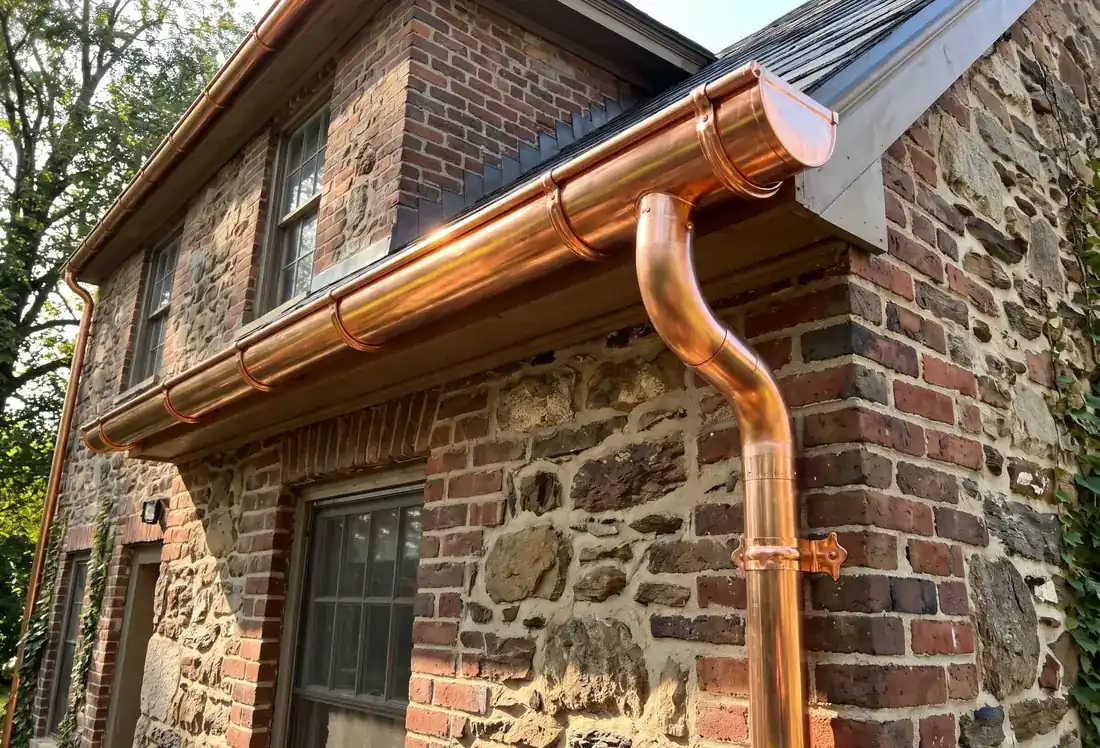
- Shapes. Half-round on brackets is the classic. K-style copper can be roll-formed seamless.
- Joints. Corners, end caps and outlets should be soldered or riveted and soldered. Ask. Sealant alone on copper wastes the main advantage of the metal.
- Fixings. Brackets, hangers, screws and rivets must be copper, brass or stainless steel.
What copper must not touch
Different metals in wet contact corrode each other, and copper is hard on its neighbors.
- Aluminum and galvanized steel. Runoff from copper stains and attacks them. Do not drain a copper gutter into an aluminum one, and do not use steel fasteners.
- Zinc. Zinc strips and zinc-based moss killers are common on Northwest roofs. Oregon State University Extension says such products should not be used on a roof with copper gutters, downspouts or flashing, because zinc corrodes copper. If your roof has zinc strips at the ridge, mention it before copper is fitted below.
- Cedar. Runoff from cedar shakes is acidic and can etch a line in copper where it drips. A wider drip edge helps.
Copper in a wet, mossy climate
With measurable precipitation on about 161 days a year, copper here weathers evenly and quickly loses its shine. That suits owners who want the aged look and disappoints those who expected it to stay bright.
Debris matters more than rain. Wet needles lying in a copper trough hold acids against the metal and leave marks. Copper needs cleaning on the same schedule as any other gutter.
Copper's own runoff discourages moss on the surfaces it washes over, which is why a clean streak often shows below copper flashing on a mossy roof.
Repair or replace
Copper is the most repairable gutter metal. Split seams are cleaned and re-soldered, dents can often be worked out, and a damaged section can be cut out and a new piece soldered in. New copper will not match old for some years. Replacement of a whole copper system is unusual unless it was badly installed.
What types of copper gutter are there?
- Half-round copper: the traditional form, hung on copper or brass brackets with round downspouts
- K-style copper: roll-formed seamless on site from copper coil
- Box or custom copper: shaped by a sheet-metal shop for built-in gutters and historic profiles
- Copper downspouts: round plain, round corrugated or rectangular
- Leader heads and conductor heads: decorative collector boxes at the top of a downspout
How does copper change color over time?
| Stage | Appearance |
|---|---|
| New | Bright, reflective salmon-pink |
| First months | Dulls to orange-brown; fingerprints and water spots show |
| First years | Even dark brown or bronze |
| Long term | Blue-green patina, first where water lingers |
The pace depends on moisture and air. In a damp climate the browning is quick and even.
Is copper safe with rain barrels and gardens?
Runoff from copper carries a small amount of dissolved copper, which is why moss avoids the surfaces it washes over. If you collect roof water for a vegetable garden, ask your local extension service whether copper runoff is a concern for what you grow.
How much do copper gutters cost?
National guides put copper at roughly $29 to $40 a linear foot installed, several times the price of aluminum, and the figure moves with the metal market. On 150 feet that is about $4,350 to $6,000 before downspouts with decorative fittings. These are national ranges, not local quotes.
How are copper gutters installed?
- Sections are formed or cut from 16 or 20 ounce sheet.
- Brackets of copper or brass are fixed to the fascia or rafter tails.
- The gutter is set in the brackets with a steady pitch.
- Miters, end caps and outlets are riveted and soldered with a torch or soldering iron.
- Round or rectangular copper downspouts are hung on copper straps.
- Every fastener is copper, brass or stainless steel.
Soldering is the skill that separates copper specialists from general gutter installers.
What affects the price
Copper costs several times what aluminum does. National guides put it at roughly $29 to $40 a foot installed, against $9 to $14 for seamless aluminum; these are national ranges, and the metal price moves.
- The price of copper at the time
- Sheet weight: 16 or 20 ounce
- Shape and size
- How many soldered corners and outlets
- Round or rectangular downspouts, and decorative leader heads
- The installer's time: copper work is slower and more skilled
Ask to see copper work the contractor has done before, and ask how the joints will be made.